Proof at a glance

Which proof covers what

Anyone putting an environmental claim on a product or its packaging today has to be able to substantiate it properly. But not every label substantiates the same thing. Some systems assess a product against comprehensive environmental criteria, some certify a supply chain and some a single, clearly defined product property.

For everyone who wants to make a particular claim and needs to know what it takes.

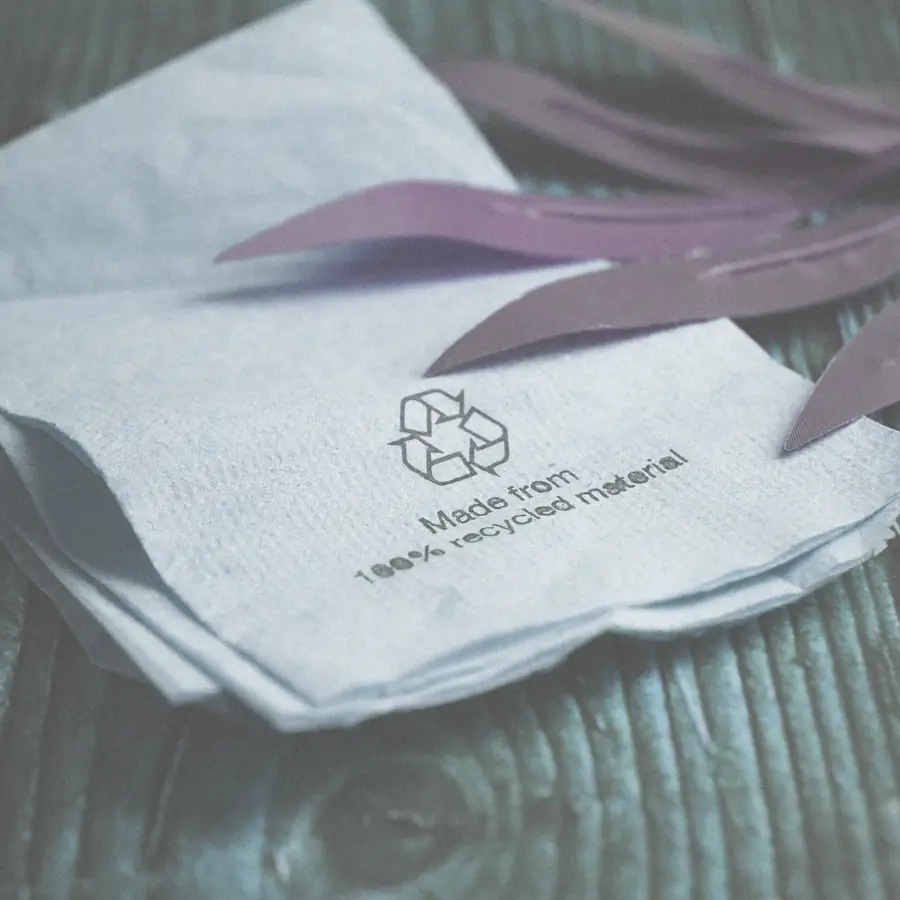
Packaging carrying environmental claims on a shelf
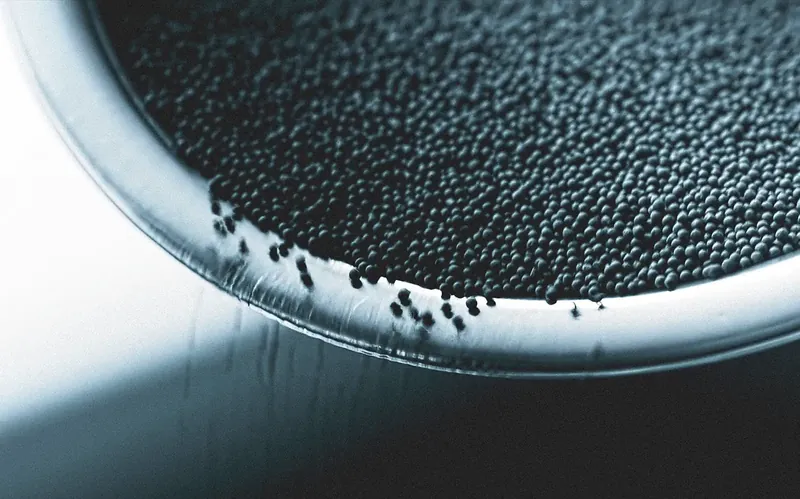
Packaging material being assessed in a laboratory

First things first

This page is not a ranking

Every system named here is an established programme with independent assessment, verification or certification. The difference lies not in which system is “better” but in what is examined and which claim that examination substantiates. That is why this page is sorted by claims rather than by providers: the question that actually comes up is not “who is best”, it is “I want to make this claim, which proof carries it”. How seriously we mean that distinction is written into our own certification programme: flustix recognises valid certificates from RecyClass, EuCertPlast, selected PolyCert Europe members and the Blue Angel DE-UZ 30a as evidence for the recycled-content and traceability requirements they cover. Where suitable current proof already exists, the same matter does not have to be examined a second time. One more note, because it resolves the most common mix-up: a substance or a property can be examined or excluded within a comprehensive set of criteria without a standalone product claim automatically following from it. What matters is always what the proof in question actually has as its subject.

Seven claims

What you want to say, and what it takes

Every claim needs a matching basis of evidence. One proof can carry several claims, but only where those claims are expressly covered by its scope of examination or certification.

This product contains 87 per cent recycled material.

A claim about a single product, with a figure attached. It needs proof that knows the path the material took and derives the share from it.

  • flustix RECYCLED assesses the traceability system and derives the recycled content from it, stated as a percentage. The bases are DIN EN 15343, ISO 22095 and DIN EN ISO 14021. Its scope reaches beyond plastic to metal, paper, board, cartonboard and glass, and covers recyclates and semi-finished goods as well.
  • Global Recycled Standard certifies recycled materials and their processing chain and adds social, environmental and chemical requirements for the sites involved. A minimum of 20 per cent recycled content applies in principle; higher thresholds apply to certain consumer-facing labelling. The standard has a strong focus on textiles but is not limited to them.
  • RecyClass Recycled Plastics Traceability Certification certifies both the traceability of the recyclate and the specific recycled content for plastic products. It draws on EN 15343 and ISO 22095 among others. Product-related claims about the recycled plastic used are therefore expressly possible.

The difference therefore lies above all in scope: RecyClass focuses on plastics, the Global Recycled Standard strongly on global recycling and processing chains, while flustix RECYCLED covers several material groups.
This packaging is recyclable.

This is not about what something is made of but about what can happen to it at the end. Two systems assess that, from different directions.

  • RecyClass assesses the recyclability of plastic packaging and additionally certifies sorting and recycling processes.
  • flustix RECYCLABLE assesses recyclability against DIN EN ISO 14021 and the minimum standard under section 21 (3) of the German Packaging Act, published by the Central Agency Packaging Register, and takes the PPWR, Regulation (EU) 2025/40, into account.

Here two different systems can substantiate the same product property, each according to its own assessment approach. In Germany the minimum standard under the Packaging Act is a central, legally anchored reference framework for measuring the recyclability of packaging subject to system participation, and it gains further weight as the PPWR is implemented.

This product contains no microplastics.

A claim about the absence of a substance. It can only be substantiated by assessing the material, not through a life-cycle assessment.

  • flustix MICROPLASTIC-FREE assesses products and semi-finished goods at every trade level of the supply chain, for communication to consumers and between businesses alike.
  • RecyClass and the Global Recycled Standard are built for recycled material and its chain and do not assess this.
  • Blue Angel addresses microplastics, or synthetic polymer particles, in individual product groups as part of comprehensive award criteria, and in certain product groups their use is expressly excluded. It remains a comprehensive ecolabel for the product group in question and is not a standalone microplastic-free certification.
  • EU Ecolabel addresses hazardous substances and corresponding polymer requirements on a product-group basis within a comprehensive set of criteria. Here too this is not a standalone microplastic-free certification.

Separately, the REACH restriction on intentionally added microplastics under Regulation (EU) 2023/2055 has applied since 2023. It prohibits, it does not substantiate.

This product is free from PFAS.

The same case as microplastics: a substance claim that calls for measurement. It is under particular pressure because REACH and the PPWR are tightening the requirements.

  • flustix PFAS-FREE substantiates freedom from PFAS for materials, products and packaging through independent laboratory testing and third-party certification, designed for complex international supply chains too.
  • Blue Angel sets out concrete requirements in various product groups for excluding or limiting PFAS, or fluorinated organic compounds. Those requirements are part of the respective comprehensive set of criteria and are not a standalone PFAS-FREE certification.
  • EU Ecolabel sets out comprehensive requirements for hazardous substances depending on the product group and promotes the substitution of problematic chemicals. A standalone certification of the claim “PFAS-free” across product groups is, however, not part of the EU Ecolabel.
  • RecyClass and the Global Recycled Standard run no programme with this subject.

An ecolabel whose criteria exclude PFAS does not carry the claim “PFAS-free”.

This product is at least 90 per cent plastic-free.

A claim about a fixed threshold, explicitly without comparison to other products or to what is usual in the sector. That is precisely what makes it robust: there is no comparison for it to rest on.

  • flustix LESS PLASTICS limits the plastic content of consumer goods, products, packaging and semi-finished goods to a defined threshold. The assessed figure appears on the trustmark itself, as MIN. X % PLASTIC-FREE.
  • No other system considered here has precisely this certification subject with a directly stated percentage for plastic content or freedom from plastic.

That does not mean other ecolabels disregard plastic. Plastic reduction, material choice or packaging requirements can be part of comprehensive sets of criteria. The difference is whether the specific percentage property is itself the subject of certification.

This product meets comprehensive environmental criteria for its product group.

This is not about a single product property but about a broader environmental assessment against a set of criteria specific to the product group. Type I ecolabels such as the Blue Angel and the EU Ecolabel were developed for exactly that.

  • Blue Angel is the ecolabel of the German federal government, awarded through the Federal Environment Ministry and the Federal Environment Agency. For more than 45 years, today over 70,000 products from more than 1,800 companies.
  • EU Ecolabel is awarded by the competent bodies designated by the member states under Regulation (EC) No 66/2010. Its criteria are based on the best products available on the EEA market across the full life cycle and correspond indicatively to the best 10 to 20 per cent.
  • flustix awards no overall assessment. Our own programme says so explicitly: it makes no statement about the quality, functionality or physical properties of a product.

We can show where our recycled material comes from.

A claim about the supply chain. For recycled content it is not an addition to the product claim but its foundation: without a closed chain there is no robust percentage.

  • flustix RECYCLED assesses exactly this. The focus of the certification is the traceability system along the entire value chain, following ISO 22095 and the controlled blending model. The programme applies to every actor who takes ownership of the material, including recyclers and intermediaries with or without storage.
  • RecyClass with its programme for the traceability of recycled plastics.
  • Global Recycled Standard with certification of the processing chain, including social and environmental requirements for the sites involved.

Here existing proofs can sensibly build on one another. Where a valid proof from RecyClass, EuCertPlast, PolyCert Europe or the Blue Angel DE-UZ 30a exists and suits the scope in question, flustix can recognise it under the rules of its own certification programme. That avoids re-examining matters already substantiated.

At a glance

Which system covers which claim

The same picture as a table, for everyone who does not read but looks things up.

Claim about the productflustixRecyClassGlobal Recycled StandardBlue AngelEU Ecolabel
Recycled content of a single product as a percentageRECYCLEDContent + traceability for plastic productsRecycled content + chain of custody, strong textile focuscriterion in product groupscriterion in product groups
Recyclability of a packRECYCLABLEown programmecriterion in product groups
Freedom from microplasticsMICROPLASTIC-FREEindividual product groupssubstance group in criteria
Freedom from PFASPFAS-FREEseveral product groupsindividually, not across the board
Plastic content below a fixed thresholdLESS PLASTICS
Environmental performance of the whole productnot our subjectno overall environmental assessment, additional social, environmental and chemical requirements for processingper product groupper product group
Traceability of the recycled-material supply chainRECYCLED, per ISO 22095TraceabilityChain of Custody
  • covers the claim as its own subject
  • a criterion inside a catalogue, not a claim in its own right
  • not covered

Frequently asked

Five questions on how this fits together

1

Which trustmark substantiates the recycled content of a product?

Suitable proof has to cover both the traceability of the recycled material used and the calculation of the stated share. flustix RECYCLED examines the traceability system along the value chain to ISO 22095 and derives the recycled content from it on the basis of DIN EN 15343 and DIN EN ISO 14021. Its scope covers metal, paper, board, cartonboard and glass alongside plastic. RecyClass can likewise certify the specific recycled content and its traceability for plastic products. The essential difference therefore lies above all in material and scope.

2

Is an ecolabel enough to substantiate a single claim?

Not automatically. An ecolabel such as the Blue Angel or the EU Ecolabel assesses a product against a comprehensive set of criteria for its product group. Even where certain chemicals must be excluded or certain material requirements met, that does not automatically mean every property derivable from it has been certified as a standalone product claim. For claims such as “PFAS-free”, “microplastic-free” or a specific stated recycled content, check whether that exact claim is carried by the underlying proof and its communication rules.

3

What substantiates recyclability?

Suitable proof has to assess the packaging against a recognised and traceable benchmark. flustix RECYCLABLE assesses with reference to DIN EN ISO 14021, the minimum standard under section 21(3) of the German Packaging Act and the PPWR. RecyClass assesses and certifies the recyclability of plastic packaging using its methods established across Europe. Both systems can substantiate the recyclability of plastic packaging, each according to its own assessment approach.

4

What substantiates freedom from microplastics?

A substance claim can only be substantiated by assessing the product itself. flustix MICROPLASTIC-FREE assesses the microplastic content of the product under the Certification Scheme flustix PLASTICFREE. The REACH restriction under Regulation (EU) 2023/2055 prohibits intentionally added microplastics, but it does not substantiate their absence.

5

Does a product trustmark also cover the supply chain?

That depends on the subject of certification. For recycled content the supply chain has to be part of any robust proof, because the origin and share of the recycled material cannot be determined reliably without traceability. flustix RECYCLED, RecyClass and the Global Recycled Standard therefore each contain chain-of-custody or traceability elements, though with differing scopes and additional requirements. Existing qualified certificates can partly build on one another: under its own programme flustix recognises suitable proofs from RecyClass, EuCertPlast, PolyCert Europe and the Blue Angel DE-UZ 30a, among others, to avoid unnecessary duplicate examination.

Free EmpCo Claim Check

Do your environmental claims hold up under the new rules?

From 27 September 2026, EmpCo brings markedly stricter requirements for environmental claims and sustainability labels: claims must be specific, verifiable and substantiated. Send us up to five of your claims and we will set out which of them already hold, which should be made more precise and where independent evidence is advisable or required. You receive a written assessment as a PDF within two to three working days. Free of charge and without obligation.

Packaged products whose environmental claims are being checked

Not sure what you need

We will place your claim for you

Tell us what is meant to go on the product. We will tell you which proof carries that claim, even when it is not one of ours.