
What does cancer have to do with plastic?
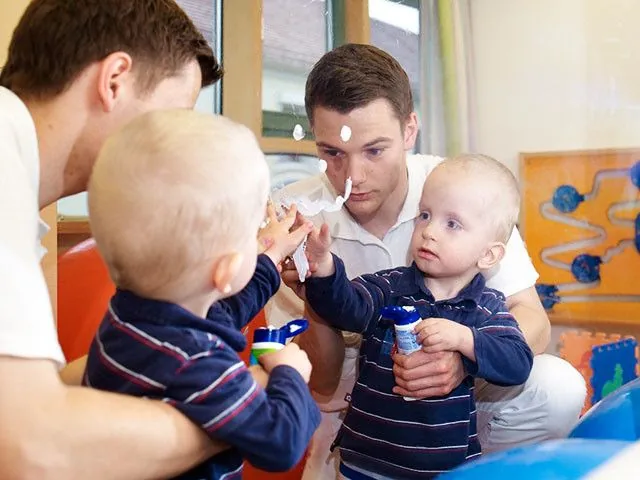
The pollution of our environment with plastic is advancing: the recent reports of microplastics in breast milk and in the placenta are especially alarming. If even the unborn child in the womb is exposed to the flood of plastic, how is a healthy life still supposed to be possible? Questions force themselves upon us: what do microplastics do to our children? And: does increasing pollution put children at greater risk of developing cancer?
Children’s cancer aid: more than 2,000 children develop cancer every year
More than 2,000 children develop cancer in Germany every year. From one day to the next everything changes for these young patients and their families: there is no room left for light-heartedness, because everyday life is dictated by the illness. Examinations, treatments and fears dominate the lives of the children and their families. In this difficult time those affected and their relatives need help and solidarity. The German children’s cancer aid organisation was founded in 1996 and has supported patients and their families with advice and practical help ever since. The organisation supports research in paediatric oncology.
Survival chances are more than 70 per cent
But there is hope too. With early diagnosis and treatment, the chances of survival are more than 70 per cent. Even though the chances of recovery have improved considerably over the past 30 years, there are many affected children in emerging and developing countries who do not have access to the same medical care as children in industrialised nations. International Childhood Cancer Day is intended as a reminder of them. It was created in 2002 by the International Confederation of Childhood Cancer Parent Organizations (ICCCPO) and takes place every year on 15 February. The aim of the day is to use the attention gained to improve the recovery rate of children with cancer worldwide.
The link between cancer and plastic is not yet sufficiently researched
When you smell plastic, drink from it or touch it, dangerous substances can enter our bodies and disrupt our hormone balance. The substances in the plastic can in turn trigger cancer, infertility, autism or allergies. Bisphenol A in particular is a controversial material that the plastics industry uses to extend plastic. Bisphenol A makes plastic cheaper, but it closely resembles a human hormone. That is insidious, because the body does not recognise it as a foreign substance.
In healthy adults the problems are minor, but in newborns, children, elderly and frail people it can trigger illness. Microplastics are moreover a hazard that cannot yet be assessed: because of environmental pollution with microplastics, agricultural products are now contaminated with plastic nanoparticles that can cross the blood-brain barrier and could even reach the bloodstream of embryos via the placenta. To date it is not established how severely these nanoparticles actually affect the organism.
The concern: microplastics may encourage cancer
It is not far-fetched to think that an increased presence of plastic residues in food from plants, marine animals and mammals has a negative effect on the human organism and encourages various kinds of cancer, especially in the digestive organs. Because plastics attract toxins and bind them. The more of them we ingest, the more toxins can be stored in the body and become a source of inflammation.
In medicine, plastic also saves lives
There is a good side to the material plastic as well. Medical treatments are unthinkable today without plastic. The material saves lives and has led to groundbreaking innovations, above all in implantology: plastics are flexible, light and can be adapted to each patient’s needs. Plastics make certain treatments in cancer therapy possible in the first place. One institute, for example, is currently developing a plastic stent whose coating is given a special microstructure. Before it is inserted into the body, medication could be applied that prevents the blood vessels from becoming blocked again. And the Helmholtz Institute for Biomedical Engineering at RWTH Aachen University has developed the tiny “Impella” blood pumps. One is implanted per heart chamber, where they work as an alternative to the conventional heart-lung machine.
The largest share of new plastic is used as single-use material
Plastic is obtained from crude oil and is therefore the product of a finite raw material. So we can no longer afford to use new plastic thoughtlessly, from an ecological and a health point of view: plastic has no place in single-use packaging. And certainly not in detergents and cosmetics. But reusable plastic is a CO2-saving factor in transport – and in medicine we have to be able to continue relying on plastic.
Looking at the global use of plastics by industry, however, a very different picture emerges: industry uses 35 per cent of plastic for single-use packaging alone – and that is the lion’s share. Only two per cent of plastic is used by medicine. How wonderful it would be if we only used plastic where it is truly needed. Because as important as the material is, it is equally dangerous to the environment, to living creatures and to people when contamination gets out of hand.