Collecting plastic waste at sea – The Ocean Clean Up Project
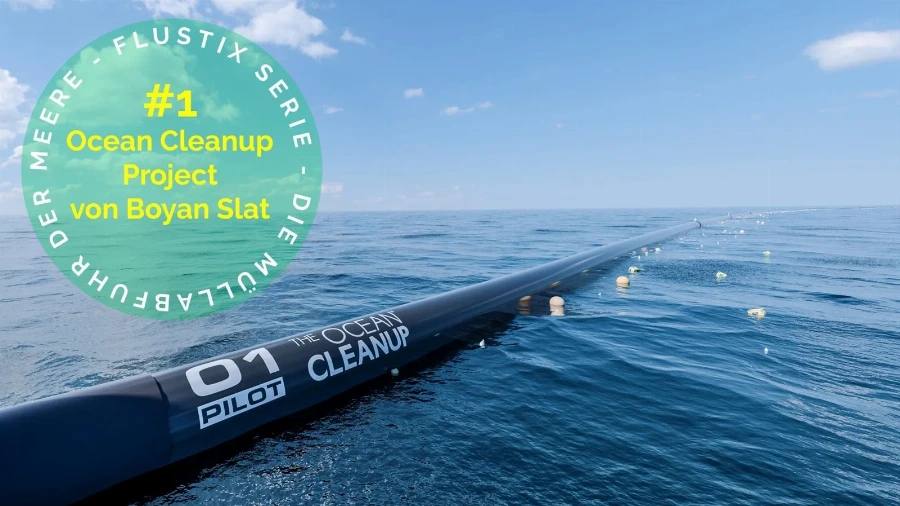
Today, Saturday 8 September 2018, the ambitious goal of the project named ‚The Ocean CleanUp‘ by Dutch inventor Boyan Slat is finally meant to come within reach. He has devised a floating system almost 700 metres long that is intended to remove plastic waste from the sea over a wide area. The structure of movable barriers, which aligns itself with the current, gathers plastic waste in special net-like collection screens. These are then emptied regularly by boats. The collected plastic is brought ashore and processed further there. There is apparently no danger to animals, since ocean currents steer them past the barrier.
A step closer to the dream of a plastic-free Pacific. 40,000 tonnes of plastic waste are to be removed in the long term.
After a five-year development and testing phase, the beta test with the gigantic System 001 begins today. A fleet of 60 systems is to follow, intended to rid the largest known waste gyre – the Great Pacific Garbage Patch in the North Pacific around Hawaii – of half its plastic deposits within five years. According to current estimates that patch now covers around 1.6 million square kilometres and reportedly holds 80,000 tonnes of plastic waste.
According to optimistic calculations, the ‘Ocean CleanUp’ could reduce all plastic waste in the world’s oceans by 90 per cent by 2040. The project is financed by donations, and all the further development needed is to be made possible so that the clean-up succeeds. You can follow the project launch live here.
The Ocean Cleanup System 001 Launch LIVE
Plastic pollution at sea calls for environmental protection – through waste collection?
It is obvious that plastic has to be avoided, that its disposal and recovery have to be regulated more strictly, and that beyond this the sea has to be freed of waste. Even so, there are current counter-voices from marine biologists who argue that the drifting plastic is colonised by the tiniest organisms and fish eggs and should therefore not simply be fished out of the water.
But what is to become of the huge plastic islands if we do not gradually break them down? Animals die, and the microplastics created by weathering poison precisely those small organisms that are crucial for the ecological balance of the oceans. To stop the prediction that by 2050 there could be more pieces of plastic than fish swimming in the ocean from becoming reality, several clean-up projects by committed environmentalists and entrepreneurs are taking shape. We introduce them to you in this series of articles.
The Ocean Cleanup Technology Explained | System 001 | Cleaning Oceans
80 per cent of marine waste comes from South East Asia
It is no longer a secret that the earth’s seas and their inhabitants are under threat. Alongside global warming and overfishing, plastic pollution plays its part.
The five largest waste gyres in the oceans have accumulated tonnes of plastic waste that has been drifting on the sea surface, bundled by ocean currents, for a considerable time. These pieces are dangerous ‘food’ for sea creatures and break down further into the tiniest particles. As microplastics they enter every system – right into our drinking water and our food chain. Industrial nations in Europe and North America are responsible for around half of global plastic production, yet most plastic – around 80 per cent – reaches the sea from South East Asia (source). According to the study Plastic Debris conducted by Greenpeace International, most of the plastic waste in the water originates on land and is washed into the oceans by weather and via rivers. Microplastic particles from cosmetics and from clothing – through the abrasion of polyester fibres in the wash, for example – spread just as widely.
So in order not to make the ocean clean-up campaigns a Sisyphean task, we have to stop producing new plastic and consuming single-use plastic as soon as we possibly can, and recycle the existing mountain of plastic.
But today we are keeping our fingers crossed for Boyan Slat and his “Ocean Clean Up”!
We will keep you informed on our blog about further developments and, hopefully, the success of the project.