The road to a plastic-free company
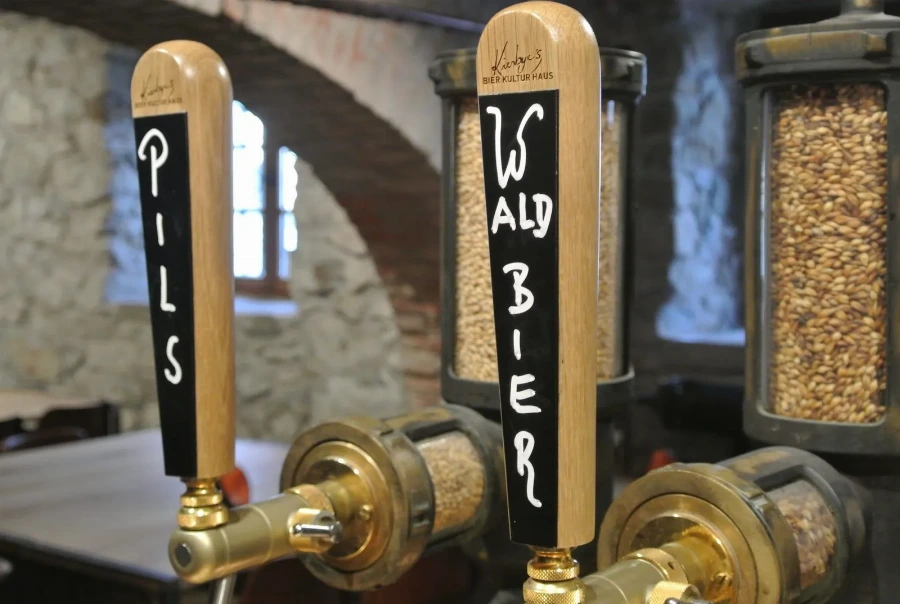
Kiesbye’s Kulturbierhaus in Austria is committed to reducing plastic and reports here on its journey.
For a good 2 years our team has been working on gradually eliminating plastic. Countless reports about floating islands of plastic waste the size of square kilometres, sea creatures dying in agony and even microplastics in beer are shocking. My own holiday experiences, whether snorkelling around Mallorca or in Bali in South East Asia, brought the full scale of the plastic pollution tragedy home to me once again. Plastic never decomposes completely. It merely breaks down into ever smaller pieces, so that in recent years the pollution has added up to such an extent that even in the remote wilderness of Austria – during the annual gathering of ingredients for our forest beer – plastic waste glints out from between mushrooms and moss.
Storms carry it there from our civilisation over many kilometres. By 2050 there will be more plastic than fish in the world’s oceans – if we do nothing! That is why in 2016 we at Kiesbye’s Kulturbierhaus decided to free our company continuously of plastic, from the offices through the beer culture house to the warehouse – with the welcome side effect of increasing the enjoyment for our customers and participants. Because a PET beer bottle that feels warm, or an unstable disposable tasting cup, is no great sensory pleasure.
What have we done so far?
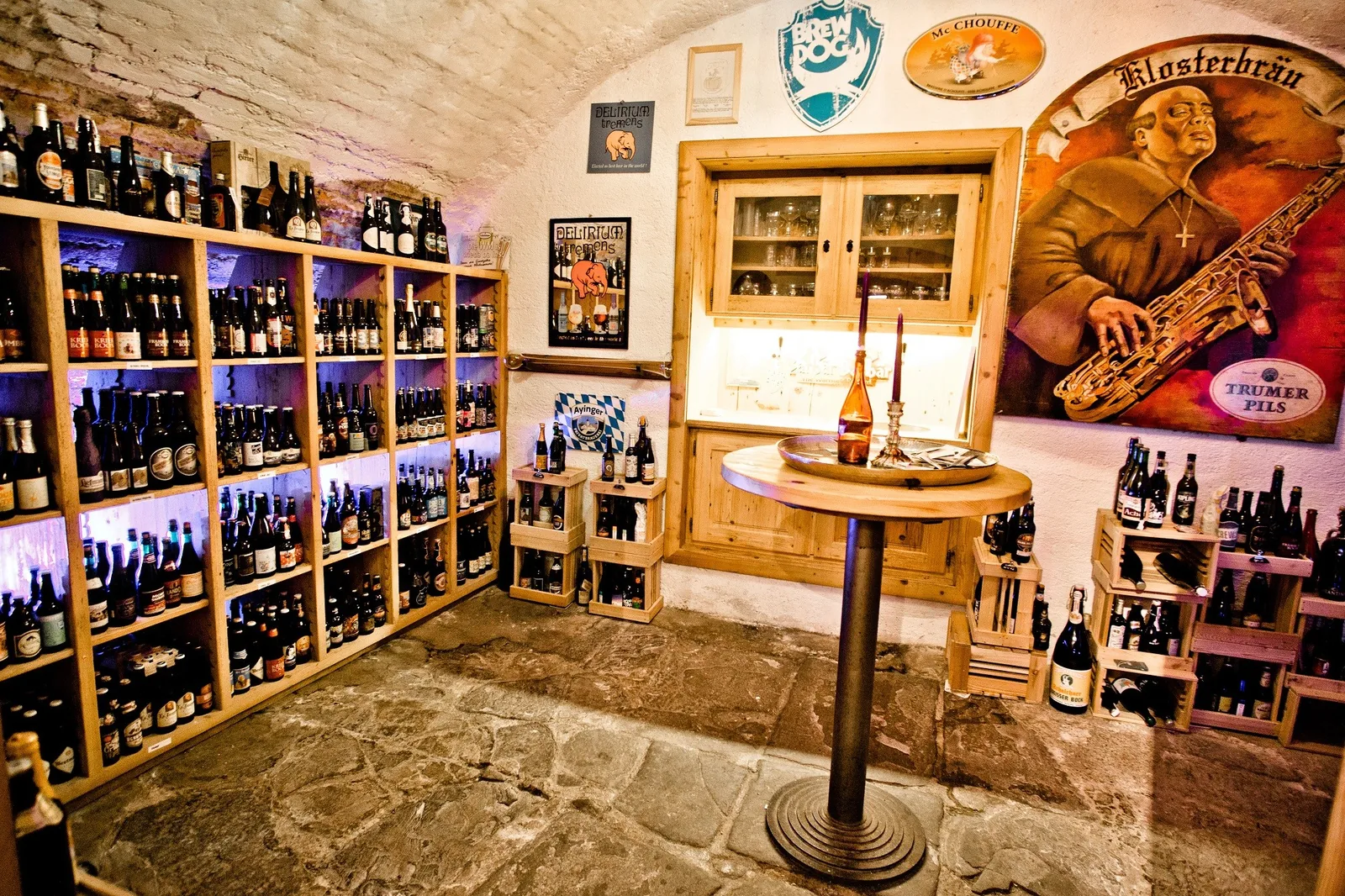
A few examples: for our interiors we now use only materials of natural origin such as leather, fur, solid wood, metals like copper and iron, or stone. We even replaced the old plastic spotlights with aluminium lights. With us it is 100% glass, no matter what and how much is being tasted. More than 1,000 specially developed beer tasting glasses are available for that, entirely without plastic. Since 2017 our training materials no longer come in classic office ring binders – because those consist of a composite of cardboard, plastic and metal and cannot be recycled – but are bound to a high standard in book form.
That our bin bags are no longer made of plastic but of reinforced paper is just as logical a consequence as switching our seminar drinks such as juices and waters to returnable glass bottles. Or we take the finest Alpine spring water from the tap. The writing boards are now made of slate instead of plastic or plastic coating. Our high-quality seminar ballpoint pens are now made with a high proportion of aluminium wherever that was feasible. Since last year all boxes have been sealed with paper tape, saving the usual PVC adhesive tapes. Our new tea and coffee station has been declared a plastic-free zone. In the company Sonnentor we found a competent partner who fully supports our philosophy. Finally, in 2016 we bought the last of our disposable PET kegs. Now we increasingly rely on large-bottle filling in glass and on the use of disposable steel kegs.
But the road to complete freedom from plastic is hard. There are no alternatives to technical devices such as phones, computers, sound systems or copiers, all of which contain plastic components. In the food sector, too, much is packaged in plastic for reasons of hygiene. And in the sterile area of an open fermentation cellar, only hoses, cleaning brushes and the like made of plastic guarantee freedom from germs. But we are staying on it here as well, and we are counting on FLUSTIX labelling plastic-free products and thus taking some of the sometimes lengthy research for plastic-free articles off our hands. It is high time for this sustainability label!
We are counting on FLUSTIX, the plastic-free seal!
Naturally we would be delighted if as many friends of our house as possible joined us on the plastic-free path. Because an intact environment is the basis of enjoyment and joy in life!
And that is what we stand for at Kiesbye’s Kulturbierhaus and at FLUSTIX, the plastic-free seal.