Ocean Clean Up(date): has the oceans’ rubbish collection failed?
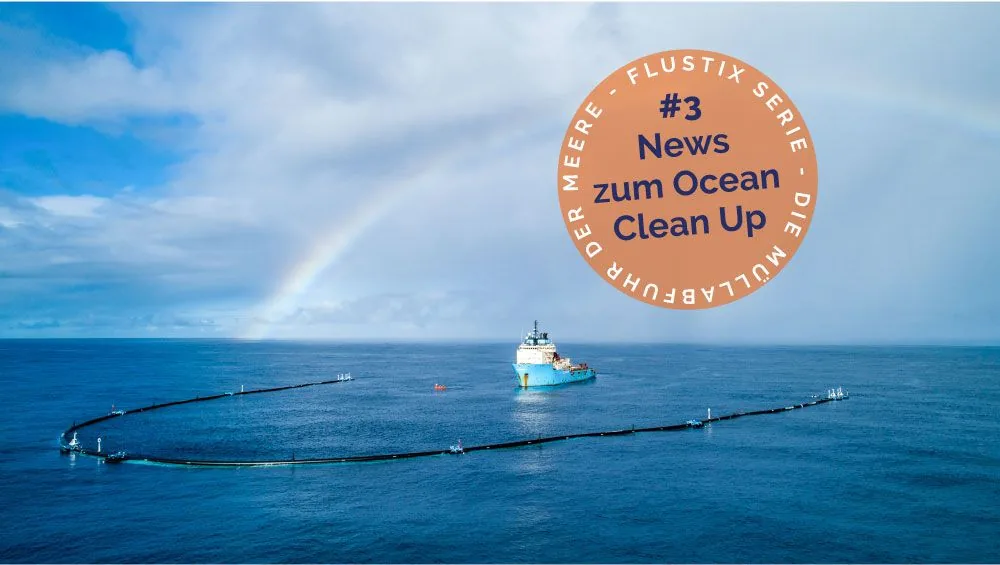
The general enthusiasm for the first large plastic catcher at sea seems dampened for the time being. Last September the latest test version of Boyan Slat’s large-scale project to free the oceans of plastic waste was launched in the Great Pacific Garbage Patch – and quite literally fell into the water. The floating tube with catching arms made of a water-permeable fabric curtain developed a crack, after which part of the structure broke away. The cause is said to be long-term ‘material fatigue’.
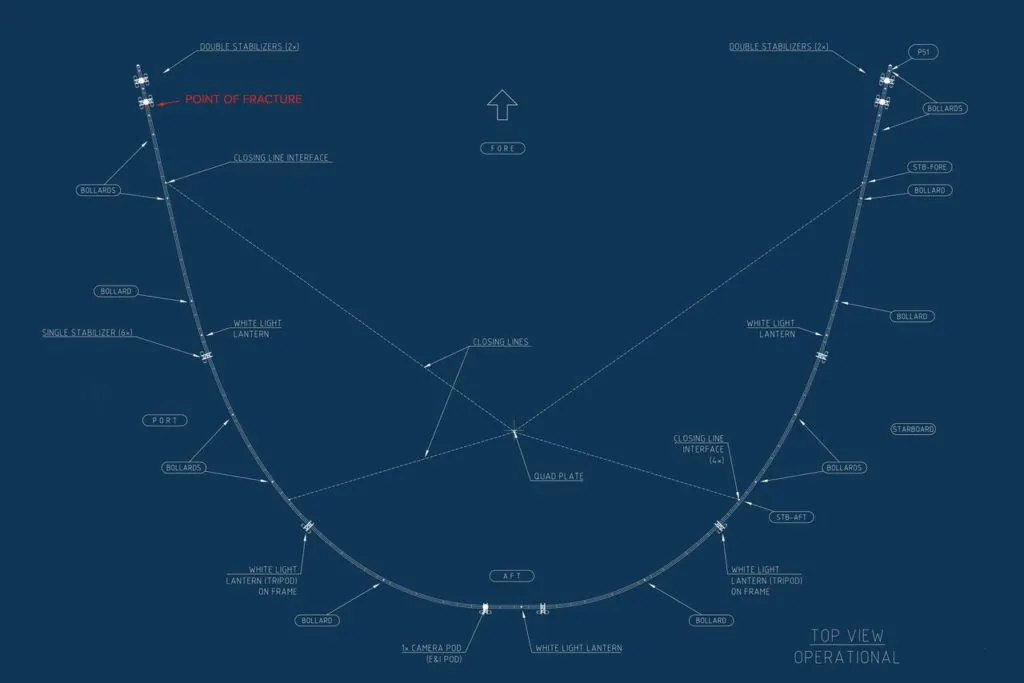
Point of fracture via www.theoceancleanup.com
No plastic waste in the trap
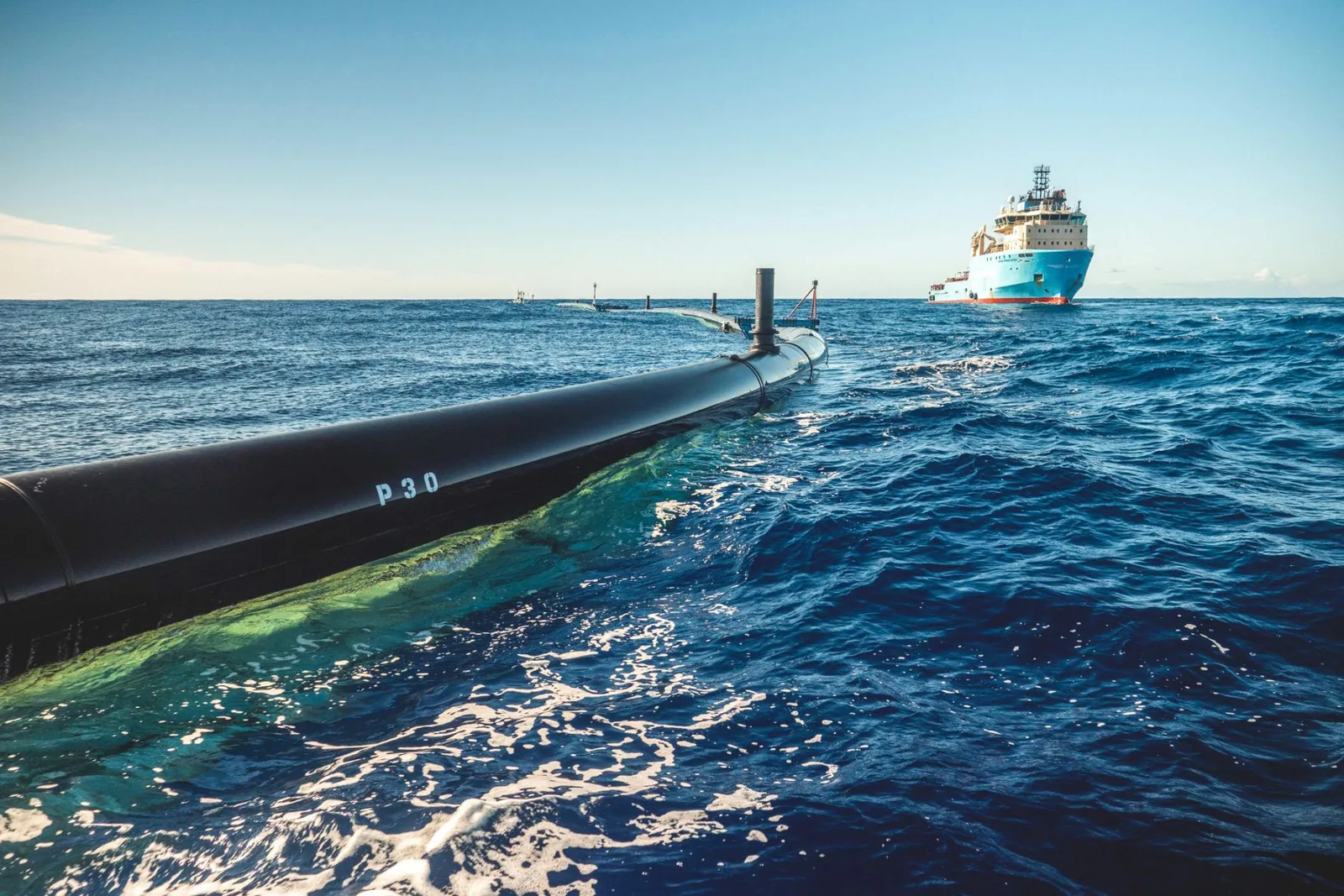
After 117 days at sea, operations had to be halted. Partly because ‘System 001’ was slowed down too much by the slower currents at depth, and because most of the plastic pieces caught drifted back out of the U-shaped barrier. To date it had collected a total of only 2,000 kilograms of plastic waste instead of the hoped-for 1,000 kilograms per week. (source)
Determination in the fight against plastic
But Slat remains optimistic: „We expect that with a few adjustments we will be able to resume work within a few months. I do not think the problems are very serious. They are part of the development process and we are learning a great deal from them.“¹
For him and his team, giving up is certainly not an option, and there can be no talk of failure.
Researchers support waste collection with infrared technology
Scientists at the University of Oldenburg had already advanced the clean-up effort with a new method of locating pieces of waste. Equipped with a research aircraft, an optical camera and an infrared spectrometer, it is possible to proceed even more precisely, according to Dr Shungudzemwoyo Garaba of the Institute for Chemistry and Biology of the Marine Environment (ICBM): certain quantities of plastic can be located and even different types distinguished from one another. This could be transferred to a satellite equipped with the appropriate technology, along with software that would act as conductor for the ‘rubbish vacuum cleaner’.²
The dream of a plastic-free ocean has not burst yet
So there is still hope that all the flaws will be eliminated and that the 60 further planned systems will eventually be deployed. With them, a full 60 tonnes of waste could be removed per week. It is already pleasing that biologists on site confirm that the catching structure’s impact on wildlife is only minimal.
We are, and remain, curious to see how things continue after the stopover in Hawaii!
Sources / further reading:
¹https://www.zdf.de/nachrichten/heute/ocean-cleanup-aufgeben-ist-keine-option-100.html
²Shungudzemwoyo Garaba, Jen Aitken, Boyan Slat, Heidi M. Dierssen, Laurent Lebreton, Oliver Zielinski and Julia Reisser: “Sensing Ocean Plastics with an Airborne Hyperspectral Shortwave Infrared Imager”, Environ. Sci. Technol., 2018, 52 (20), pp 11699–11707, DOI: 10.1021/acs.est.8b02855