
Europe’s recycling rate: 42.4 per cent. But how can you prove what is really in the product?
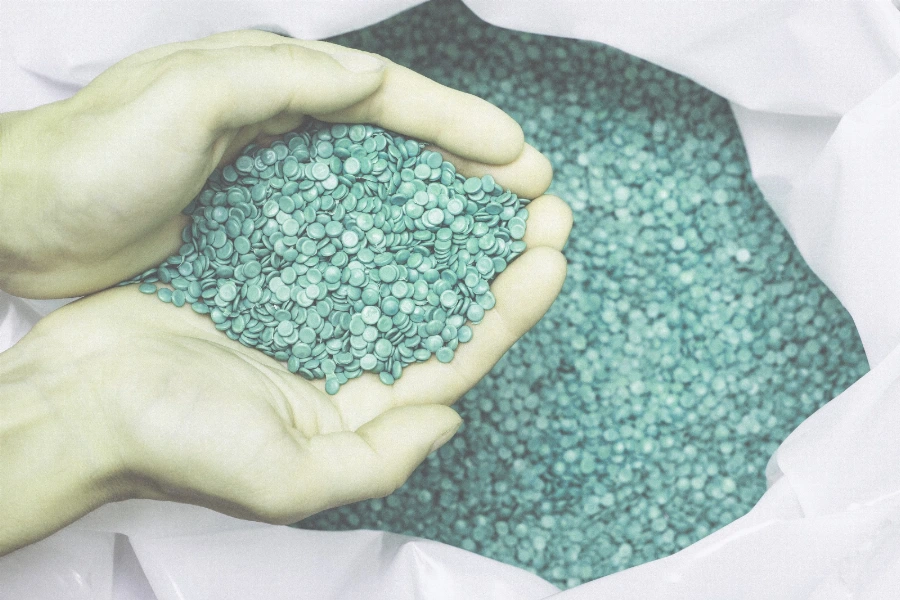
Europe is recycling more plastic packaging. At the same time, the requirements for proof of origin, traceability and new recycling processes are growing. With RECYCLED 3.0, flustix is systematically advancing its established certification programme.
In 2024, 42.4 per cent of Europe’s plastic packaging waste was recycled. Eurostat reported this on 22 October 2026. That is progress on the previous year, and yet only half the story.
The statistic in itself says nothing about how much recycled material actually ends up in new packaging. Plastic waste recycled outside the EU also counts towards the rate. For manufacturers and brands, an entirely different question therefore remains decisive: Where does my recyclate come from, how much of it is really in my product and who can confirm that independently?
Europe demands more recycling. And better evidence.
Under the new European Packaging and Packaging Waste Regulation (PPWR), the use of recyclate is gradually becoming mandatory for many types of plastic packaging. Depending on the packaging category, minimum shares of between 10 and 35 per cent are set from 2030, or as provided for by the transitional rules.
The challenge: a laboratory analysis cannot reliably determine whether a material consists of virgin material or recyclate. What counts, therefore, are traceable raw material flows, supplier evidence, documented production processes and independently verified material balances.
This is precisely where flustix has focused its work for years.
flustix RECYCLED 3.0: effective depth of verification, clear transparency, greater certainty
With the forthcoming version 3.0, we are comprehensively developing our RECYCLED certification programme further.
Building on EN 15343 and ISO 22095, the requirements for quality management, auditor competence, supply chain auditing and independent conformity assessment are being defined more precisely.
A particular focus is on the traceability of the recycled materials used. Post-consumer and post-industrial recyclates (PCR and PIR) are clearly distinguished and accounted for, material origin and production volumes are documented in a traceable way, and the actual use of recyclate or its permissible allocation is independently verified.
Also new is the option of a supplementary verification of geographical origin. Increasingly, what matters is not only how much recycled material is used, but also where the waste was originally collected, sorted and recycled.
Suitable existing certificates can be taken into account. This avoids unnecessary duplicate audits without compromising the necessary reliability of the evidence.
View the flustix RECYCLED 3.0 certification scheme
Downstream brand owners and retailers benefit too: through the flustix sub-licence system they can market products that are already certified and unchanged under their own brand, with their own certificate, an individual licence number and the right to use the flustix trustmark. No repeat laboratory testing, no unnecessary double certification and no disclosure of confidential supplier relationships. Real added value for manufacturers and their customers.
Find out more about the flustix sub-licence system
When traceability is worth real money
France shows how important such evidence has become. With the arrêté on modulating producer contributions for the use of recycled plastics, financial incentives for using recyclate were introduced as of 1 January 2026.
Article 9 of this order is particularly interesting: anyone wishing to claim the corresponding EPR bonuses must be able to prove the traceability of the recycled material used according to the prescribed criteria. The requirements include traceable information on recycled content per plastic type, on origin from post-consumer waste, on processing and on the relevant material quantities. Article 8 adds geographical requirements for collection, sorting, recycling and reincorporation, including a maximum radius of 1,500 kilometres around the geographical reference point of mainland France.
For this, Article 9 requires a verifiable chain of custody together with appropriate control and verification mechanisms. Suitable certifications such as flustix RECYCLED 3.0 can be taken into account as a route to providing this evidence.
A self-declared recycled content share on its own is therefore not enough to claim the financial benefit. What counts is a verifiable supply chain.
France exemplifies a development that is now shaping other European markets as well: national plastic packaging taxes, EPR bonuses and differentiated packaging fees increasingly reward the proven use of recycled plastics or take it into account when charges are calculated.
Independent evidence of recycled content is thus increasingly becoming an economic factor, and not just a tool for sustainability communication under EmpCo.
In our separate article on plastic tax in Germany and Europe, we explain in detail which financial benefits and new rules are emerging in Europe.
Chemical recycling: the EU creates a concrete calculation framework for the first time
Another decisive development comes straight from Brussels.
With Implementing Decision (EU) 2026/1425 of 30 June 2026, the European Commission has for the first time laid down detailed binding rules on how recycled content from additional recycling processes, including chemical processes, can also be calculated, allocated by mass balance and verified within the regulated scope.
The decision initially covers the calculation and verification of recycled content in single-use PET beverage bottles under the SUPD. With it, the EU provides an important methodological basis for the further development of independent certification schemes.
Unlike mechanical recycling, many chemical processes first break plastics down into chemical feedstocks, which are then processed into new plastics. The recycled content can therefore often no longer be physically attributed directly to a single end product.
For this, the new EU rules set concrete requirements for mass balances, material flows, the calculation of creditable recycled quantities and independent verification. Quantities used for energy (for example for fuels) must not be counted as recycled content. Allocation to specific products must also be traceable and safeguarded against double counting.
flustix is responding to precisely this regulatory development with its own Module A for chemical recycling.
The module, currently in the technical approval process, adds specific requirements for mass balancing, material allocation, auditing and the prevention of double counting to flustix RECYCLED 3.0.
In doing so, we expressly distinguish between physically verified recycled content and recycled content allocated by mass balance. Even in chemical recycling, it must remain clear what has actually been proven and what a certificate is allowed to state.
Independently verified recycled content creates economic value
The benefits of reliable recycling evidence now reach far beyond sustainability communication.
Manufacturers, recyclers, brands and retailers need robust information for purchasing, quality management, regulatory documentation obligations and communication with consumers. At the same time, European tax and incentive systems are giving traceable evidence of origin and supply chains direct economic significance.
With flustix RECYCLED, we combine scientifically sound evidence criteria, independently audited supply chains and transparent product labelling in a certification system that can be used internationally.
Because recycling is more than a percentage in a statistic. What matters is what is actually in the product and how reliably that can be proven.
With RECYCLED 3.0, we are consistently pursuing this path.
On our programme page you can find out more about flustix RECYCLED and request certification.
Sources
- Eurostat: plastic packaging waste and recycling rate 2024
- France: arrêté of 5 September 2025, Articles 8 and 9
- EU: Implementing Decision (EU) 2026/1425 on verifying recycled content
- EU: Packaging and Packaging Waste Regulation (PPWR), Article 7