SUPD: Driving Innovation Instead of Holding It Back
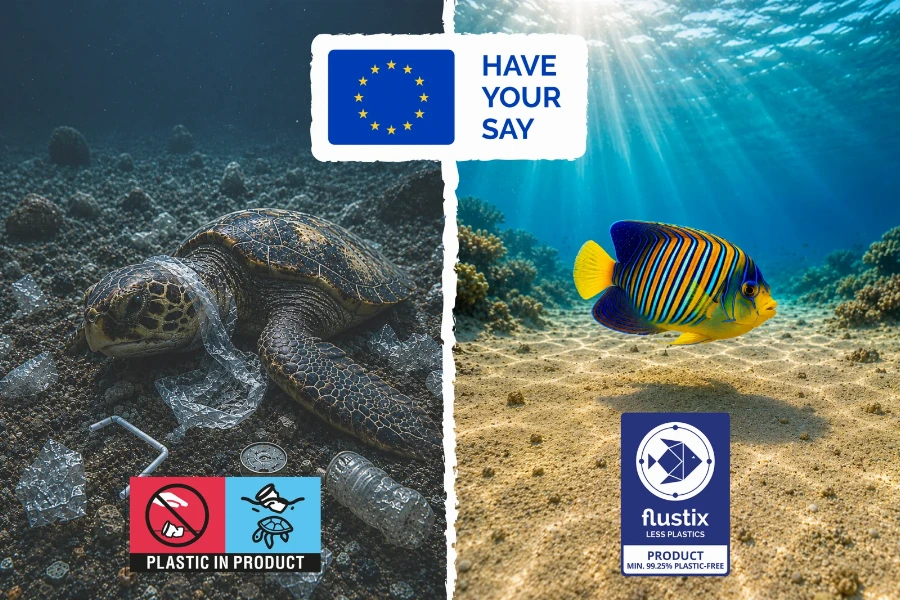
As part of the EU “Have Your Say” consultation on the evaluation of the Single-Use Plastics Directive (SUPD), we submitted our position paper focusing on one key issue: the current lack of a quantitative assessment logic for minimal polymer contents in fibre-based products. Clear, transparent and enforceable criteria are needed to preserve the innovative intention of the SUPD.
The full submission to the SUPD evaluation can be found here within the EU “Have Your Say” process:
Read the postThe practical reality across Europe is already showing clear inconsistencies:
⚠ Several legal proceedings concerning SUPD implementation are currently pending in Germany.
⚠ The Netherlands has abandoned its former “0.0% approach” and is now re-evaluating the previous methodology.
⚠ France withdrew its 0.1% threshold due to practical non-feasibility and is likewise reassessing its approach.
⚠ In Poland, according to the current situation, identical products are being assessed differently depending on the region — products accepted in the north are in some cases rejected in the south.
The result is a fragmented regulatory landscape — in some cases even within individual Member States.
For businesses, authorities and consumers alike, this situation is neither practical nor sustainable in the long term.
Our proposal
Therefore, we call for 1. a comprehensive, EU-wide harmonised quantitative threshold, combined with 2. an analytically verifiable assessment logic as well as 3. a stronger alignment with actual recycling realities and circular economy principles. Instead of “0.0% interpretations”, there is a need for 4. clear, transparent and enforceable criteria that can be applied consistently and independently verified.
Fibre-based solutions containing minimal, technically unavoidable polymer fractions should not be regulated in the same way as conventional plastic-dominant single-use products.
From our perspective, a harmonised quantitative approach is essential, for:
- authorities
- industry
- consumers
- legal certainty in enforcement
- the promotion of innovation
- a functioning European single market
and, above all, for the environment. Only clear, harmonised and practically verifiable rules can ensure consistent and effective implementation across Europe.
Most importantly, the necessary technical and regulatory foundations already exist, including standardised analytical methods, established recycling processes and independent third-party verification.
We welcome further technical exchange with industry, the recycling sector, the paper and packaging industries, authorities and additional stakeholders.
About flustix
The organisation, founded in Berlin in 2017, offers six distinct flustix seals: The flustix LESS PLASTICS – MIN. xx% PLASTIC-FREE seals certify, in collaboration with recognised testing laboratories and accredited certification bodies, the entire product as well as either its packaging or the product itself. Products that refrain from using microplastics are transparently labelled with the PLASTIC-FREE – Product Content Microplastic-Free seal. The flustix RECYCLED trustmark certifies recyclates, semi-finished goods, and products with recycled content, including plastics, metals, and glass. flustix RECYCLABLE independently communicates the recyclability of packaging. The flustix seals serve as a guide for consumers and thereby support companies in pursuing a sustainability-focused business strategy and ensuring credible sustainability communication.